
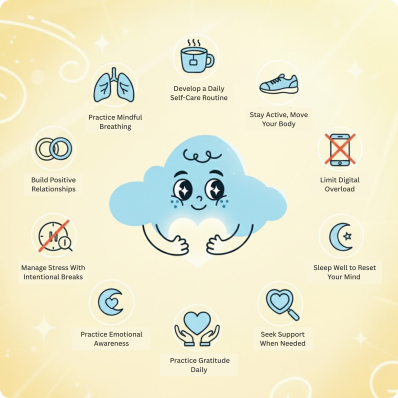
Emotional wellbeing affects how we think, feel, and act, impacting work performance, relationships, and overall quality of life. In today’s fast-paced world, prioritizing emotional wellbeing isn’t just good practice, it’s essential. These practical, evidence-based tips can help you build resilience, reduce stress, and feel emotionally balanced every day.
1. Practice Mindful Breathing
Start your day with a few minutes of mindful breathing to calm your nervous system. Deep breathing helps lower stress hormones and gives you mental clarity before challenges arise.
2. Develop a Daily Self-Care Routine
Small self-care habits, like a short walk, journaling, or stretching, contribute to emotional wellness. Prioritize activities that recharge you and help regulate mood.
3. Stay Active, Move Your Body
Physical activity like walking, yoga, or dancing boosts endorphins, your brain’s feel-good chemicals, supporting emotional balance and stress relief.
4. Build Positive Relationships
Strong social connections are a major component of emotional wellbeing. Regular check-ins with friends or family increase support and reduce feelings of isolation.
5. Limit Digital Overload
Too much screen time disrupts sleep patterns and increases stress. Set healthy boundaries with social media and create tech-free windows in your day.
6. Practice Gratitude Daily
Spend a few minutes each day noting what you’re grateful for. Gratitude has been linked to increases in emotional wellbeing and overall life satisfaction.
7. Manage Stress With Intentional Breaks
When pressure builds, a break doesn’t make you less productive, it keeps you emotionally grounded. Try the “5-minute reset”, step away, breathe, and refocus.
8. Seek Support When Needed
There’s strength in asking for help. Whether it’s talking with a trusted person or accessing professional resources, support systems can improve emotional resilience.
9. Practice Emotional Awareness
Noticing your emotions without judgment helps you respond, not react, to life’s ups and downs. Journaling or reflection can build this skill.
10. Sleep Well to Reset Your Mind
Quality sleep improves mood, focus, and resilience. Aim for regular sleep patterns and calming pre-bed routines.
Improving emotional wellbeing is a lifelong habit, but small, consistent steps make a huge difference. These ten daily practices are actionable and science-backed, helping you feel more grounded and resilient regardless of where you live.