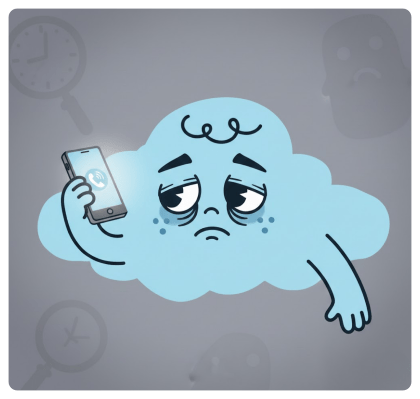

Sometimes, when everything has quieted down you hear a thought that feels too familiar and it makes you doubt yourself without reason. You know it’s not coming from you but it still lands like a weight you can’t shrug off. For a moment, you wonder if you will ever shake it off or if it’s just going to follow you everywhere and will keep reminding you of rules you never agreed to.
It’s like stepping into a room you left years ago. You know where the shadows fall and how the light hits the floor. And for a second, it’s disorienting, because you realize the room isn’t around you anymore, but it’s still inside you. That is how old environments travel. They tuck themselves quietly into your thinking and sometimes you don’t even notice until they speak.
You are too much.
Why can’t you just be normal?
Just keep your head down.
For a second, you might think this is you. Your intuition, your realism, but the voice feels borrowed. Not born from your own experience and not crafted for who you are now. It’s an echo of home, school or a place that taught you to shrink yourself and made you forget what it felt like to take up space.
We like to imagine that leaving a place or moving away from a house, a classroom, a friend, a phase of life means leaving its influence behind too. Clean cut and fresh start. But life rarely works in neat chapters, the environment moves in with you, rearranges the furniture and starts narrating your thoughts.
And that’s when things get confusing. How do you argue with a voice that once decided what was acceptable, what was praised and what was punished? You don’t realize you are still there not physically but mentally, still carrying the same fears and habits you picked up there.
The old environment teaches survival before selfhood.
If emotions were inconvenient, your inner voice might whisper, don’t be dramatic.
If you were the “good one”, it might say, don’t disappoint anyone.
If love was inconsistent, you might hear, don’t get too comfortable. It won’t last.
These sentences are subtle. Practical. Sticky. They disguise themselves as wisdom. But wisdom for when? And for who?
What kept you safe at sixteen might suffocate you at twenty one. What navigated chaos might sabotage peace now. Yet the voices keep going, loyal to a version of you that no longer exists.
There’s quiet grief in realizing this, grief for the self-talk shaped by a world that wasn’t always kind. You can mourn it and still move forward. You can honor your past without letting it dictate your present.
Healing isn’t dramatic. It looks like pausing mid-thought and asking, Who taught me this? It’s wanting something without immediately listing reasons you don’t deserve it. It’s resting even when guilt creeps in. It’s like arguing with a ghost. And ghosts are persistent. They show up when life softens, when love is steady, when you finally try something new. Old environments trained you to stay alert, not at ease.
There’s something to hold onto, noticing the voice is already a disruption. Awareness helps you separate instinct from conditioning, fear from familiarity and truth from repetition.
Slowly, you build a new inner soundscape that speaks differently and kindly. It asks questions instead of delivering verdicts: What if it works out? You’re allowed to take up space here. You don’t have to earn rest.
At first, it feels foreign like when you move to a new city and the streets feel unfamiliar, you miss old shortcuts, you get lost. But over time, you find your rhythm, your places, and start to belong. The old voice will still appear, especially during stress, failure, or intimacy. Healing doesn’t erase memory, it shifts power. You can listen without obeying and thank it for trying to protect you, and gently say, I’ve got this now.
You’re not there anymore. Your life has changed. Your inner world is allowed to change too. If your inner voice sounds like your old environment, it doesn’t mean you’re broken. It means you adapted and you survived. And now, you get to live.
Living, unlike surviving, requires a different language, the one you’re still learning, one sentence at a time.
Some voices aren’t yours, they have just traveled with you for too long or Sometimes your mind borrows voices, you deserve to hear your own.